
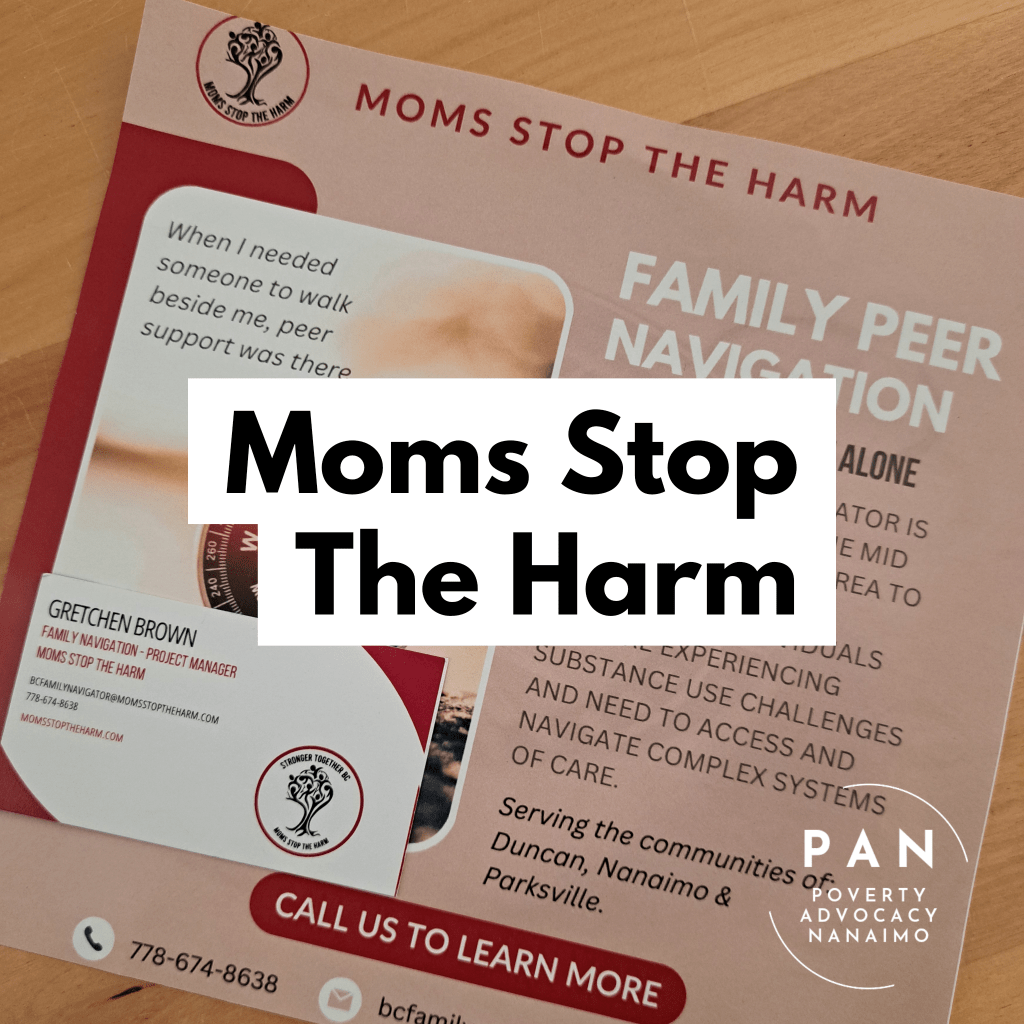
Gretchen from Moms Stop The Harm graciously took the time to answer our questions about the organization, what it offers in Nanaimo, her role, and her very personal reason for doing this work.
1. What is the purpose of Moms Stop the Harm? How did it start?
Moms Stop the Harm is a network of Canadian families who have been impacted by substance-use-related harms and deaths. We advocate for the change of failed drug policies, provide peer support to grieving families, and assist those with loved ones who use or have used substances. MSTH was formed in April 2016 by three women ( Petra Schulz, Lorna Thomas & Leslie McBain), who had each lost sons to drug harms. What began as an advocacy initiative by three concerned mothers is now a network of thousands of Canadian individuals and families.
2. What is your role with Moms Stop the Harm?
I facilitate a Nanaimo Healing Hearts Bereavement support group for families and individuals who have lost a loved one due to substance use related causes. I am also the program manager for the Family Peer Navigation Program.
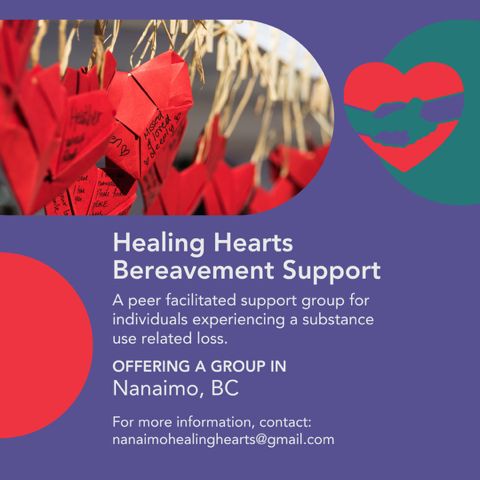
3. Can you tell us about the two groups that meet regularly in Nanaimo? What is their focus? When and where do they meet?
There are two peer led support groups provided by MSTH (Healing Hearts Bereavement support group; Holding Hope support group).
Healing Hearts groups are peer-facilitated by people with lived experience of a personal loss due to substance use related harm. What gives us common ground is the challenges we face due to the stigma of substance use, as well as coping with traumatic death. Healing Hearts support group is a place where participants can share their pain with others who have gone through the same experience, without stigma and without blame. Healing Hearts meets the second Thursday of the month at Brechin United Church at 2020 Estevan Road from 5:00 to 6:30pm ( time might change).
Holding Hope Groups are also peer-led, but are for families with loved ones living with substance use disorder. This group provides mutual support and healing by coming together to share stories, resources and supporting one another. The group provides reassurance that they are not walking this journey alone, and a safe place to build strength and resilience for families who feel overwhelmed in supporting their loved ones.
Holding Hope meets the first and third Thursday of the month at Brechin United Church 2020 Estevan Rd from 6:00 to 7:30pm.
4. Why is this group and their work so important to you personally?
I lost my son Hayden three years ago to a toxic drug poisoning. He was 31 years old and had struggled with his mental health for many years. During those years, I was his sole support person. Due to lack of education about mental health and substance use, I did more harm than good in my attempts to help him. The trauma and struggle was devastating and when he died I was broken beyond belief. If I was going to survive, I needed to find support, and so for 2 years I drove every month to Victoria to a MSTH Healing Hearts support group. That group and all who attended with me saved my life and gave me the strength to carry on. As I began to understand the immensity of the toxic drug crisis and the impact that it has had, I knew that I needed to do my part to prevent the horror of losing a loved one to a drug poisoning from happening to another Canadian family.
I started to volunteer as a co-facilitator for the Nanaimo Healing Hearts Support Group, which I now facilitate.
In Oct. 2022 when MSTH posted a position for a program manager for their Family Peer Navigation pilot project, I applied and was successful.
5. What is the Family Peer Navigation Service that MSTH provides?
MSTH has identified through feedback from the Holding Hope members that there is a service gap in supports based on age (families of adults who use substances), and region (Mid-Island).
The MSTH Family Peer Navigation Project will work within four realms to fill this service gap that is not being filled by existing services.
The four realms are:
1. Navigational Support: this is to help families support their loved one, by bridging gaps to community resources by providing education and information on existing services, making calls and advocating for access, accompanying families to services and partnering with service agencies to form productive collaborations.
2. Emotional Support: this is to help families help themselves. The Family Navigators are people who are walking or have walked the same path. They are trained peer support workers who provide 1:1 compassionate listening and emotional support over the phone, Zoom or in-person. This support is available when needed.
3. Advocacy: Family Peer Navigators can provide a third party presence at challenging meetings and events, for example: accompanying families to court, physician appointments etc.
4. Educational Support: Family Navigators will share up-to-date resources to empower families with the tools and resources to support their loved one and themselves.
5. How can the community support your work?
The community can support my work by spreading the word of the services that MSTH provides, specifically the Family Peer Navigation Services; and the two peer led support groups that are active in Nanaimo and throughout B.C.
 Poverty Advocacy Nanaimo